Inside Prometheus: Meta’s Journey to a Gigawatt-Scale Supercluster
With the recent release of the Muse family of foundational models, we want to take you inside the infrastructure that has made it all possible. The first phase of Prometheus, our gigawatt scale supercluster, is already complete and we’re working toward scaling it to comprise 1 million GPUs. Prometheus also features…
- With the recent release of the Muse family of foundational models, we want to take you inside the infrastructure that has made it all possible.
- The first phase of Prometheus, our gigawatt-scale supercluster, is already complete and we’re working toward scaling it to comprise ~1 million GPUs.
- Prometheus also features technologies like closed-loop liquid cooling to help it operate efficiently.
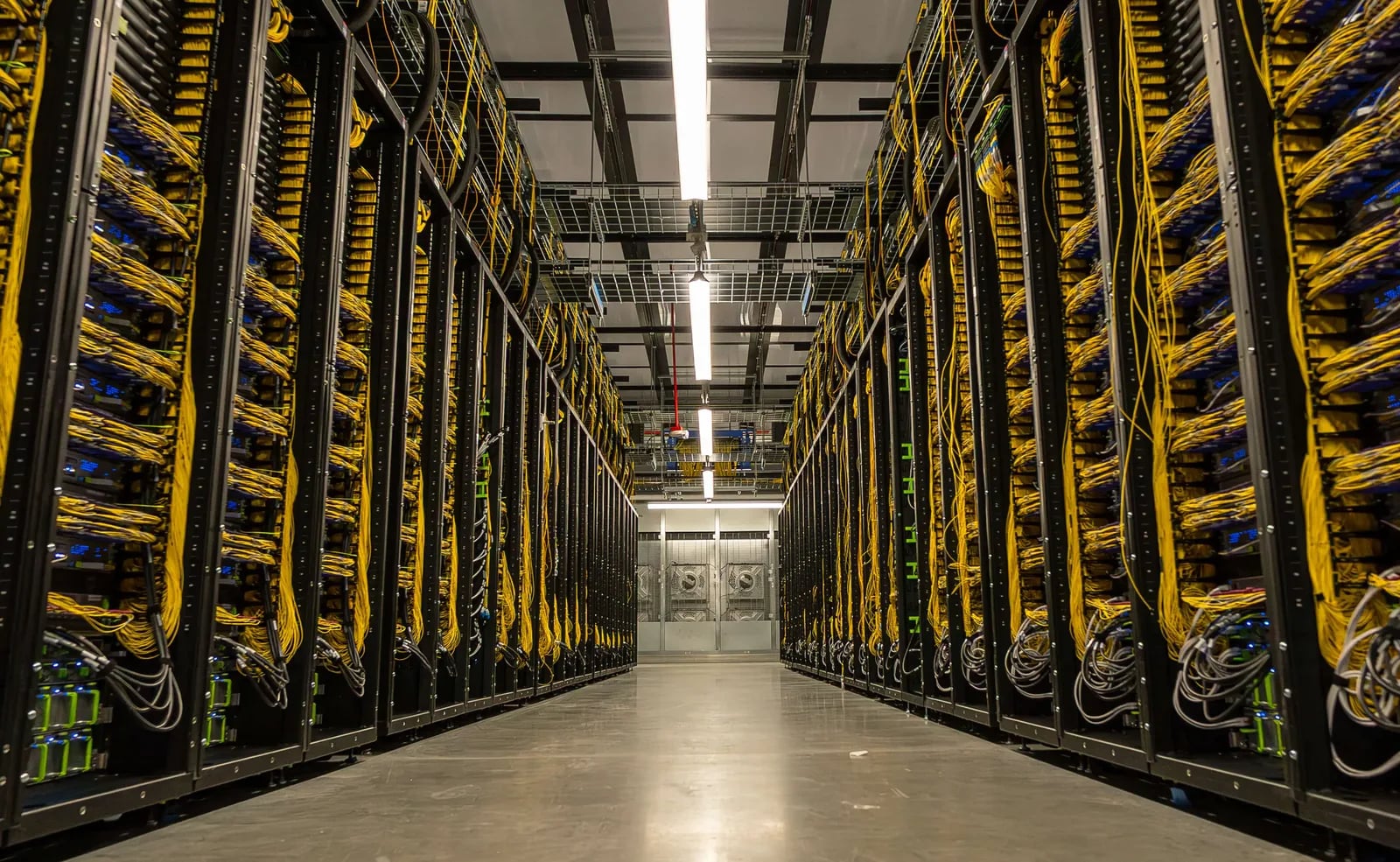
Right now, in New Albany, Ohio, Meta is undertaking its most ambitious AI infrastructure project to date. Prometheus, our gigawatt-scale supercluster, is an advancement in our infrastructure that is training the next generation of foundational models that will bring new AI experiences to billions of people.
Two years ago, New Albany was a conventional data center site running web traffic. With advancements in hardware, networking and building design, we reworked this site to be home to training programs for frontier models. We’re building the supercluster in phases. The first phase has already been completed and was used to train our Muse foundational models, including the Muse Wonder models, our new frontier models that deliver state-of-the-art performance on personal and professional agentic tasks.
Large training jobs require everything to work optimally to sustain their performance; an issue on a single host can slow down or stop the entire job, lowering its ‘goodput’. By focusing on improving our systems’ stability and reliability we were able to achieve more than 85% goodput for pre-training runs and more than 90% goodput for reinforcement learning (RL) runs of Muse Wonder. During these training runs, we were able to achieve an overall wall-clock mean time between interruptions (MTBI) of ~47k GPU hours. Since then, we have landed further changes across our fleet including firmware fixes to increase MTBI to more than 54K GPU hours, and we are constantly improving it.
Keep reading Engineering at Meta with Pro
This source is part of the Pro library. Unlock every premium source, AI translation and custom feeds.
Originally published on
Engineering at Meta
Keep reading
 AWS News Blog