Agent Lightning v1.0: A 3,500-Line Lightweight Agentic RL Framework for Training Agents with Real Harnesses
Training AI agents with reinforcement learning can be challenging because their tools, context, and decision making are managed by complex frameworks. Agent Lightning connects existing agents to RL training, making it easier to improve them without rebuilding them. The post Agent Lightning v1.0: A 3,500 Line…
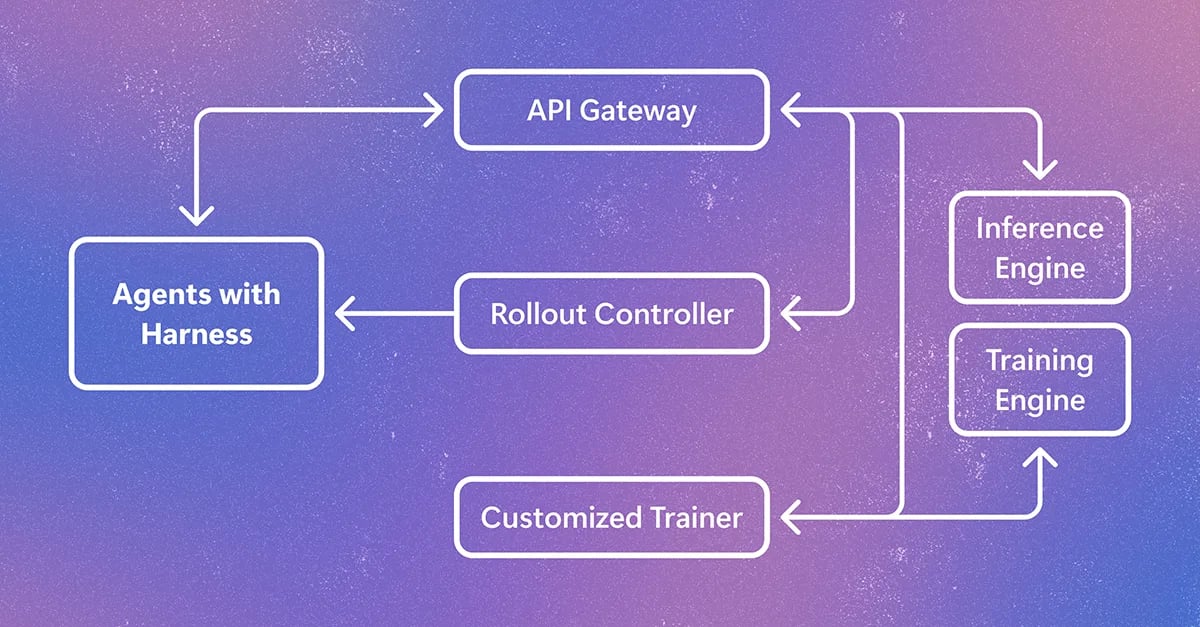
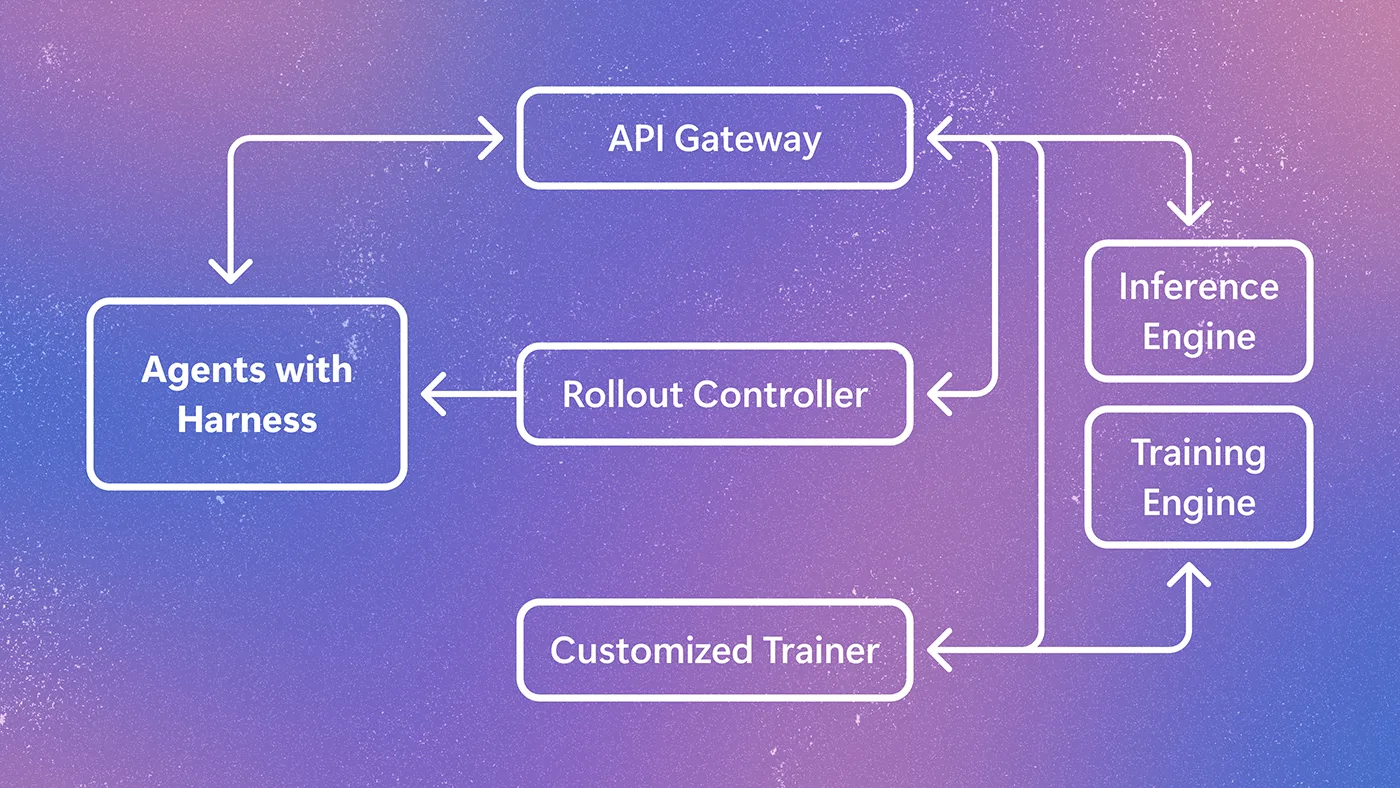
At a glance
- Harnessed Agentic RL: Microsoft Research Asia introduces a training paradigm in which the same agent harness used in deployment participates directly in reinforcement learning, removing the need to reimplement the agent inside the training framework.
- Lightweight by design: Agent Lightning v1.0 delivers a complete agent RL control plane in roughly 3,500 lines of code.
- Native Kubernetes support: agents run as standard Kubernetes jobs on self-managed clusters, cloud Kubernetes, or local infrastructure, with no dependency on paid commercial sandbox services.
- Data-efficient training recipe: an end-to-end coding agent pipeline raised Qwen3.5-9B from 41.8% to 56.4% Pass@1 on SWE-bench Verified, a 14.6 percentage point gain, using only about 6,000 training samples based on open sourced dataset.
AI agents have evolved from single models to complex full-stack systems built from models, tools, and execution environments. Their capabilities increasingly depend on the agent harness that coordinates them from outside the model. Reinforcement learning (RL) is an approach where AI systems learn through trial and error, guided by rewards and penalties for their actions. RL can make those agents better, but most agent RL systems require developers to reimplement the agent inside the training framework. That is costly, and it means the agent being trained is not quite the agent that gets deployed.
Keep reading Microsoft Research with Pro
This source is part of the Pro library. Unlock every premium source, AI translation and custom feeds.
Originally published on
Microsoft Research
Keep reading

 Docker Blog
 Next.js Blog