Client-Side Load Balancing at a Million Requests Per Second
How we built an in process client side load balancer for a million requests per second of internal fan out traffic, what we layered on top (N ring fade in, occupancy based bounded load, and AZ aware routing with a latency health factor), and how hardening that path cut cost and made the service resilient to the…
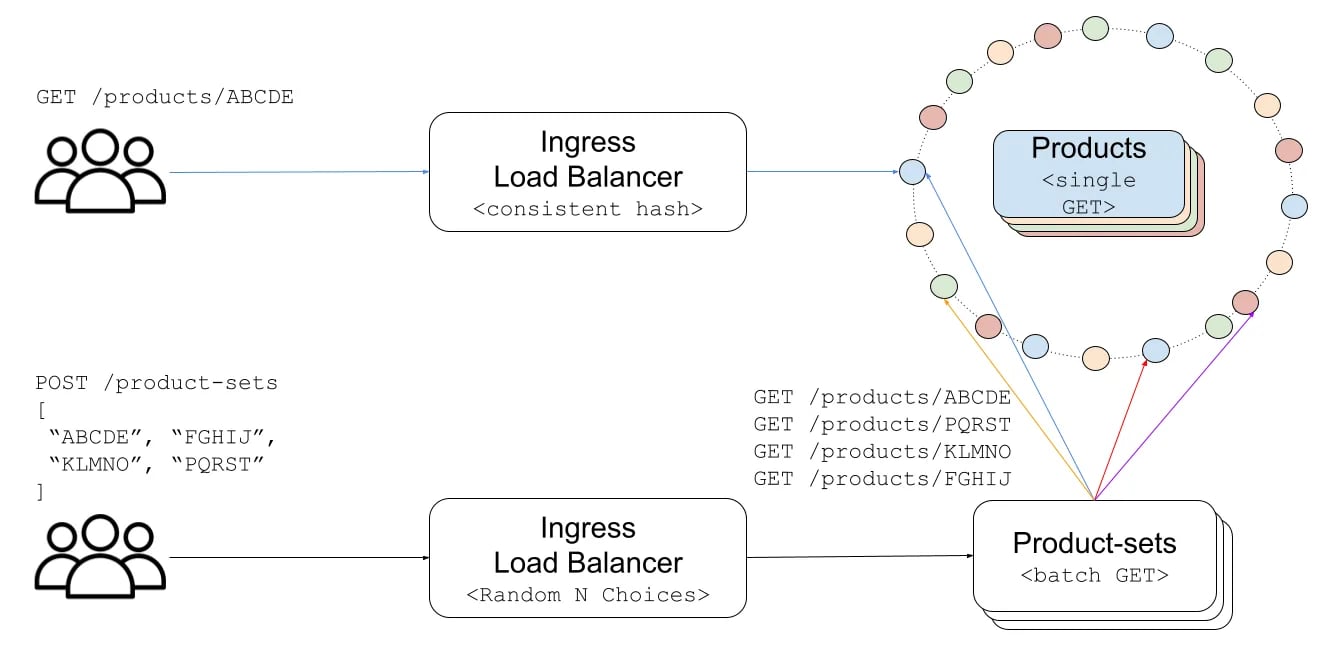
Our busiest API ran its high-volume internal traffic through the cluster's shared edge ingress load balancer. For years we could never be sure whether a latency spike came from our own code or from reusing that shared edge router internally.
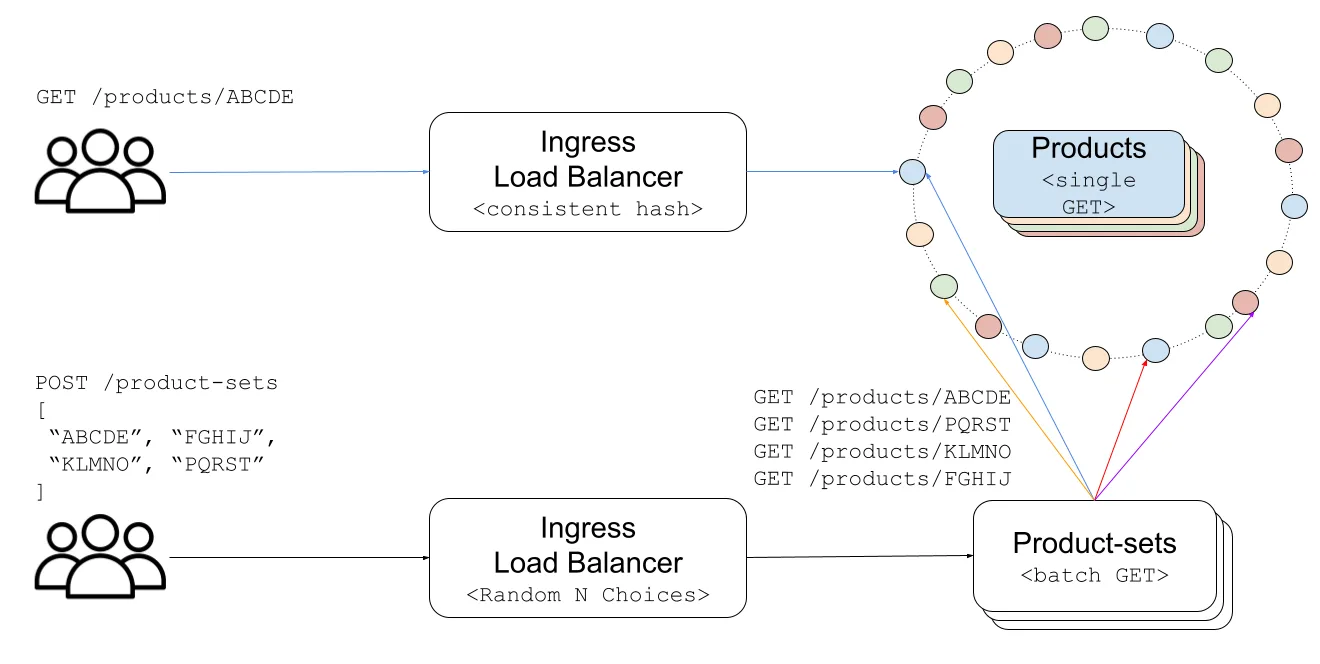
In a previous post, we described how we built Zalando's Product Read API (PRAPI), serving millions of requests per second with single-digit-millisecond latency across 25 European markets. Every product page, search result, and checkout depends on it. A brief degradation has measurable impact on sales, resulting in high performance and availability requirements. The low latency is achieved through consistent-hash routing: Skipper, the cluster's edge load balancer, routes the same product ID to the same pod(s), helping to leverage pod-local caches in the underlying application. The routing infrastructure for this API matters.
On launch, Skipper handled both edge routing and the internal traffic between our batching and single-get components. It was always my intention that client-side load balancing (CSLB) would replace the latter, and I had hoped it would be a fast-follow. But Skipper was fast, adding only a couple of hundred microseconds to each request, and the team was understandably reluctant to introduce significant change to a working system. Over the years, as incidents accumulated where the root cause was never quite clear (Skipper, or PRAPI?), it became harder to ignore the structural problem. For a single batch-of-100 request, PRAPI had a 100x exposure to Skipper. When Skipper sneezed, PRAPI got the flu.
Keep reading Zalando Engineering with Pro
This source is part of the Pro library. Unlock every premium source, AI translation and custom feeds.
Originally published on
Zalando Engineering
Keep reading

 Netflix TechBlog