Design Proteins with RFD4-Proteina Using Reward-Guided Inference-Time Search
Protein design is a search problem. Choose amino acids for an eight residue protein sequence and more than 25 billion combinations are possible. Choose amino...
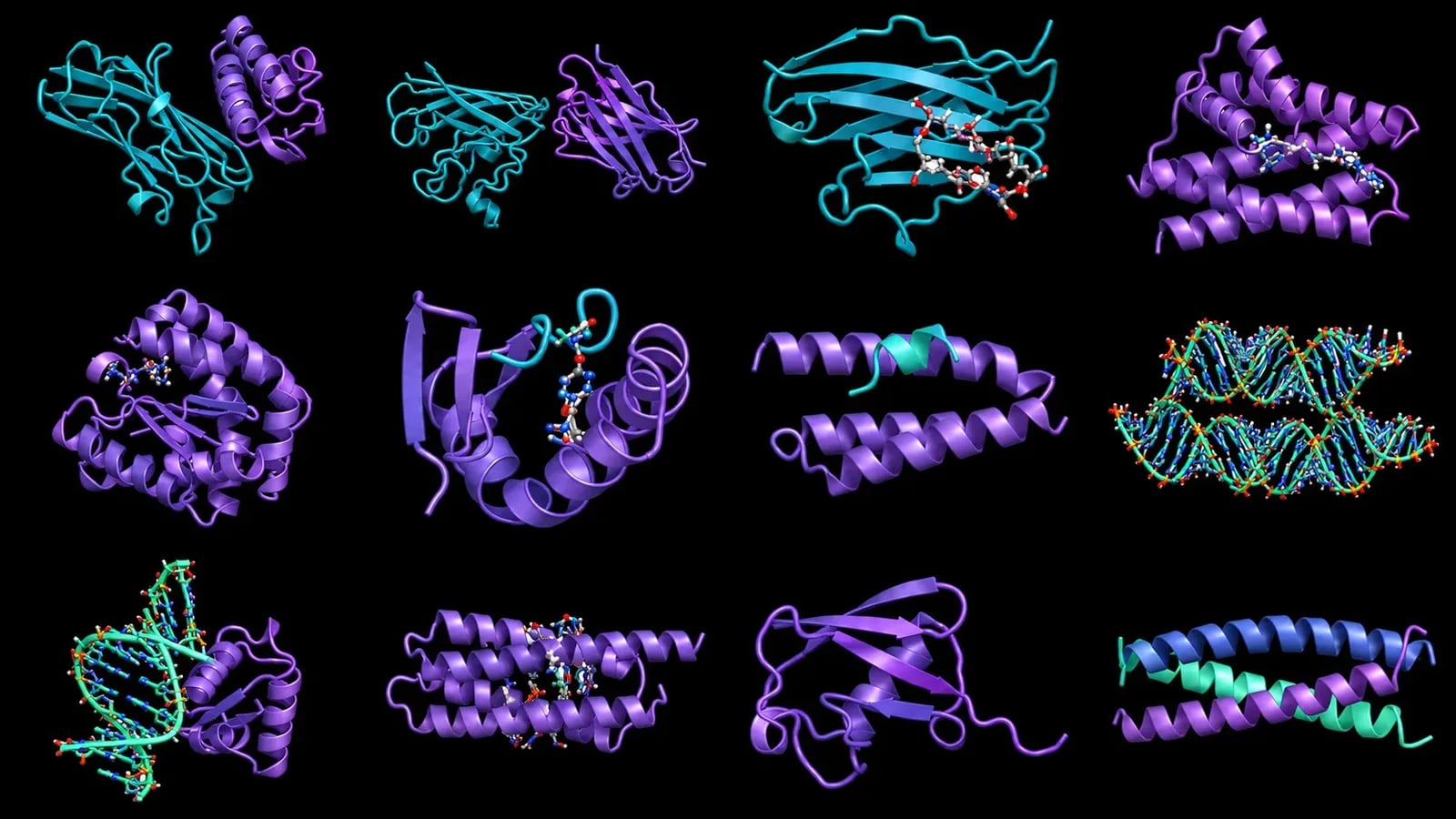
Protein design is a search problem. Choose amino acids for an eight-residue protein sequence and more than 25 billion combinations are possible. Choose amino acids for a 100-residue protein sequence and the number of possibilities exceeds the number of atoms in the observable universe. Somewhere in that space is a protein that opens a path to a new therapy. There are too many combinations to search exhaustively, so finding it depends on knowing where to look.
RFD4-Proteina, an NVIDIA BioNeMo open model co-developed with the Institute for Protein Design at the University of Washington’s School of Medicine, navigates that space using patterns learned from nature. It co-designs protein sequences and all-atom structures, and uses reward-guided inference-time search to focus compute on the most promising candidates.
This tutorial shows computational biologists, ML engineers and drug discovery researchers how to design protein binder candidates against PD-L1, an oncology target, using reward-guided inference-time search and introduces experimental validation results across design tasks.
You can access RFD4-Proteina in two ways:
خواندن NVIDIA Technical Blog با پرو
این منبع جزو کتابخانه پرو است. همه منابع ویژه، ترجمه هوشمند و فیدهای شخصی را باز کنید.
منتشرشده در
NVIDIA Technical Blog
ادامه مطالعه






 Cloudflare Blog