Cross-store product clustering across millions of stores
How we group product listings across millions of stores using tiered matching models, graph partitioning, and learned cluster merge decisions.
Read Part I in this series covering how we group related listings within a single store.
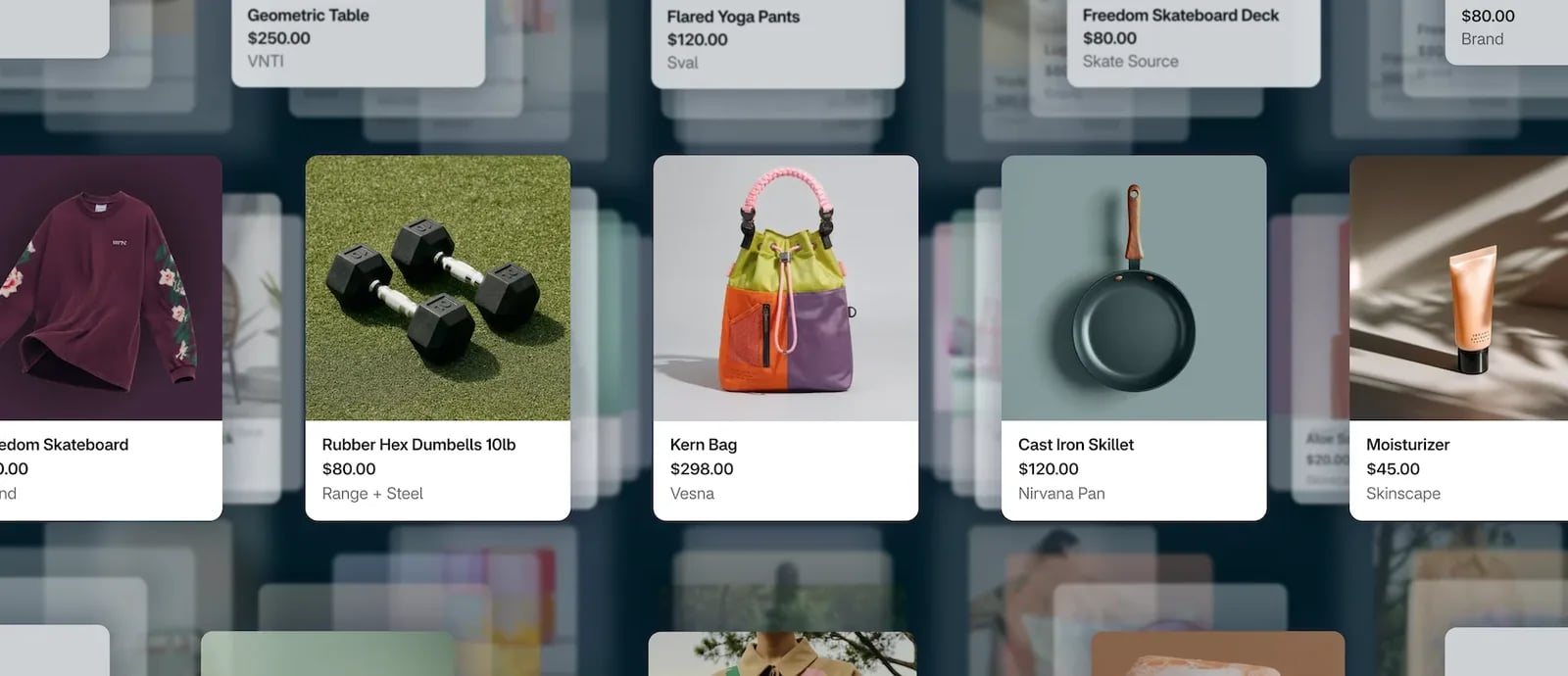
Shopify hosts billions of product listings across millions of stores. Merchants have the freedom to organize their products however works best for them, but that flexibility becomes a challenge when we need to work with the entire catalog. Different listings can represent the same product, and we need to recognize those relationships to give buyers, developers, and AI agents a unified view of products and the stores that sell them.
The Shopify Catalog is a unified intelligence layer that standardizes product data across the platform and makes it available to developers and AI agents via the Catalog API. At the heart of Catalog is product clustering. Different merchants may structure the same real-world item very differently; one might create a single product with all size and color variants, another might create separate products per color.
Clustering allows us to group all of these related variants and products under a single Universal Product Identifier (listed as UPID in the Catalog API). Regardless of how merchants structure their listings, any version of the same real-world item lives under one roof.
خواندن Shopify Engineering با پرو
این منبع جزو کتابخانه پرو است. همه منابع ویژه، ترجمه هوشمند و فیدهای شخصی را باز کنید.
منتشرشده در
Shopify Engineering
ادامه مطالعه


 Cloudflare Blog
 Cloudflare Blog