How Shopify turns open models into task experts
Sidekick’s frontier model hands its most token heavy work to open models that Shopify post trains and serves itself. Here’s the loop we use to build them, and where NVIDIA’s models, software, and GPUs make each turn faster and cheaper.

Sidekick, Shopify’s AI commerce assistant, runs on a frontier model that talks to the merchant, plans the work, and calls tools. For focused jobs, it hands off work to subagents, several of which run open models we’ve post-trained for that one task.
Take the GraphQL subagent. When a merchant asks, “Which products are almost out of stock?”, it reads Shopify’s API schema, searches the docs, writes and runs a query, and returns the results. That work is context-heavy: the subagent reads about 40 tokens for every one it writes, and a frontier model’s API charges for every one of them.
For that subagent, we built a task expert by post-training NVIDIA Nemotron 3.5 Lightning. On this task, it scores slightly higher than the frontier model, responds 7× faster, and costs about 90% less to serve. And because Shopify controls the post-trained weights, we can serve the model on our own GPUs and decide when it changes.
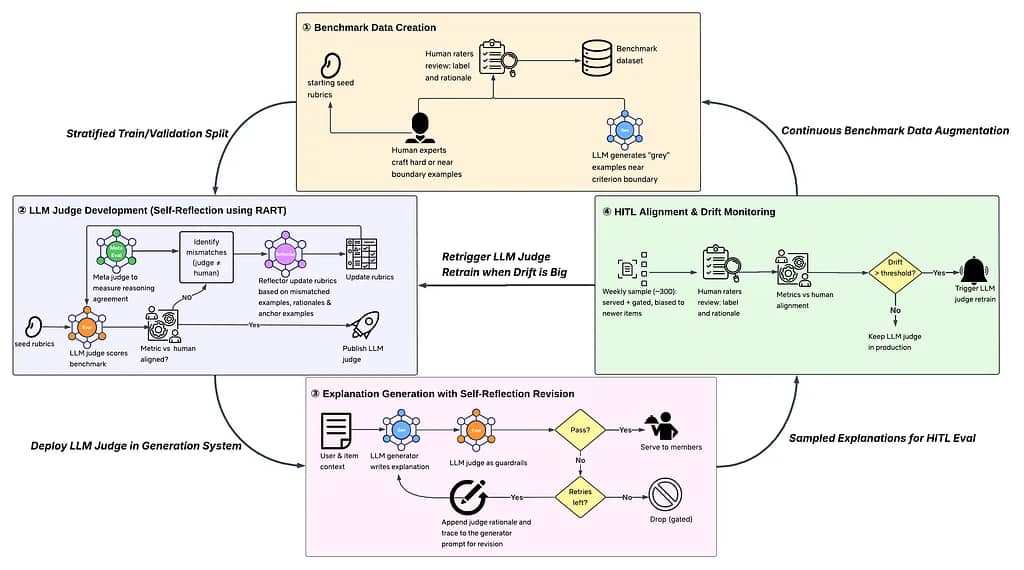
The loop that builds them is Sidekick’s continual learning loop, with a hardware twist.
خواندن Shopify Engineering با پرو
این منبع جزو کتابخانه پرو است. همه منابع ویژه، ترجمه هوشمند و فیدهای شخصی را باز کنید.
منتشرشده در
Shopify Engineering
ادامه مطالعه


 Cloudflare Blog
 Cloudflare Blog


 Netflix TechBlog