How AI Changes the Role of Applied Scientists
Levi Boxell, Tilman Drerup, Alexandr Lenk The Economics Team at Instacart is an applied science team that operates at the intersection of machine learning engineering and economics. Similar to other applied science teams, our work involves a good chunk of engineering, steeped in statistics, math, theory, and…
Levi Boxell, Tilman Drerup, Alexandr Lenk
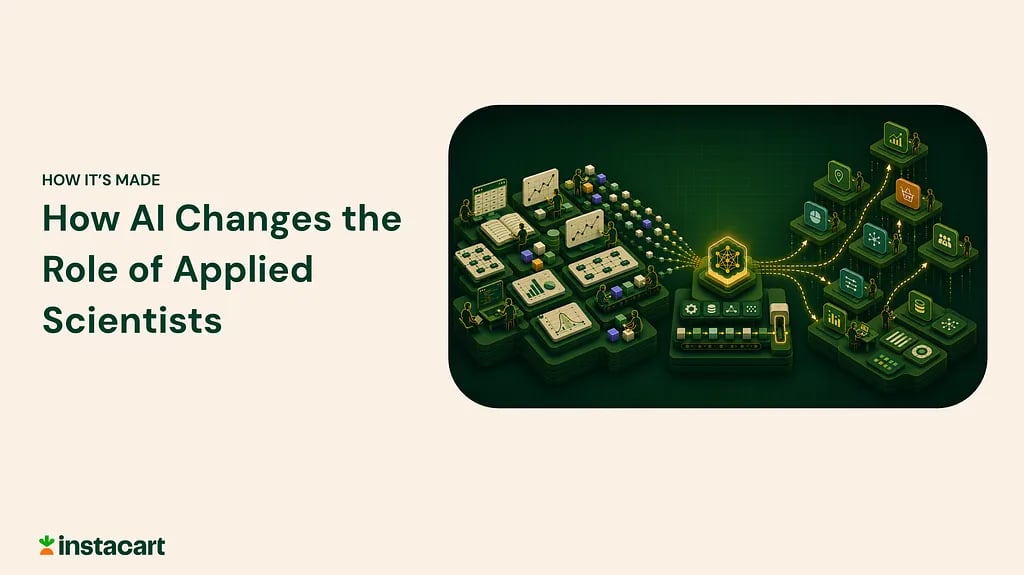
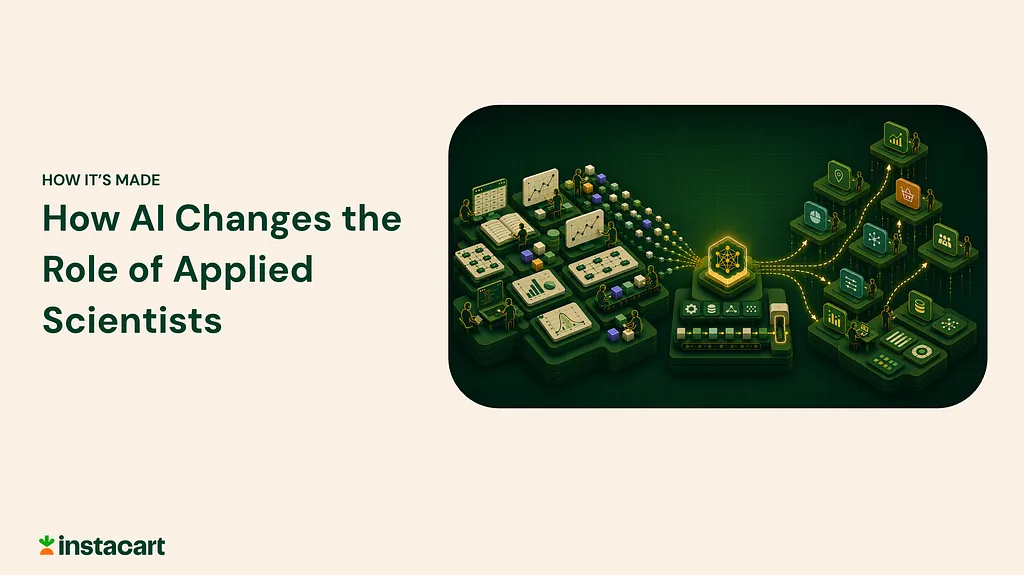
The Economics Team at Instacart is an applied science team that operates at the intersection of machine learning engineering and economics. Similar to other applied science teams, our work involves a good chunk of engineering, steeped in statistics, math, theory, and strategy. And while that is still at the heart of what we do today, the surprisingly rapid emergence of artificial intelligence has also fundamentally altered our work in ways that we did not see coming.
With this post, we want to provide a brief check-in and share an analysis of the patterns we are seeing from a distinctly economic perspective. To do so, we analyze the empirical dynamics of our project portfolio between 2023 and today, looking at the evolution of both the nature and quantity of our work over time. To start, let’s have a quick refresher of what economists at Instacart do and provide a theoretical framework to think about the impact of technological change through AI.
Keep reading Instacart Tech with Pro
This source is part of the Pro library. Unlock every premium source, AI translation and custom feeds.
Originally published on
Instacart Tech
Keep reading



 GitHub Engineering
 Supabase Blog