Sapienz Receives ISSTA 2026 Impact Paper Award
Ke Mao, Mark Harman, and Yue Jia have been recognized with the ACM SIGSOFT International Symposium on Software Testing and Analysis (ISSTA) 2026 Most Influential Paper Award for their 2016 research, “Sapienz: multi objective automated testing for Android applications.” The recognition celebrates a decade of impact…
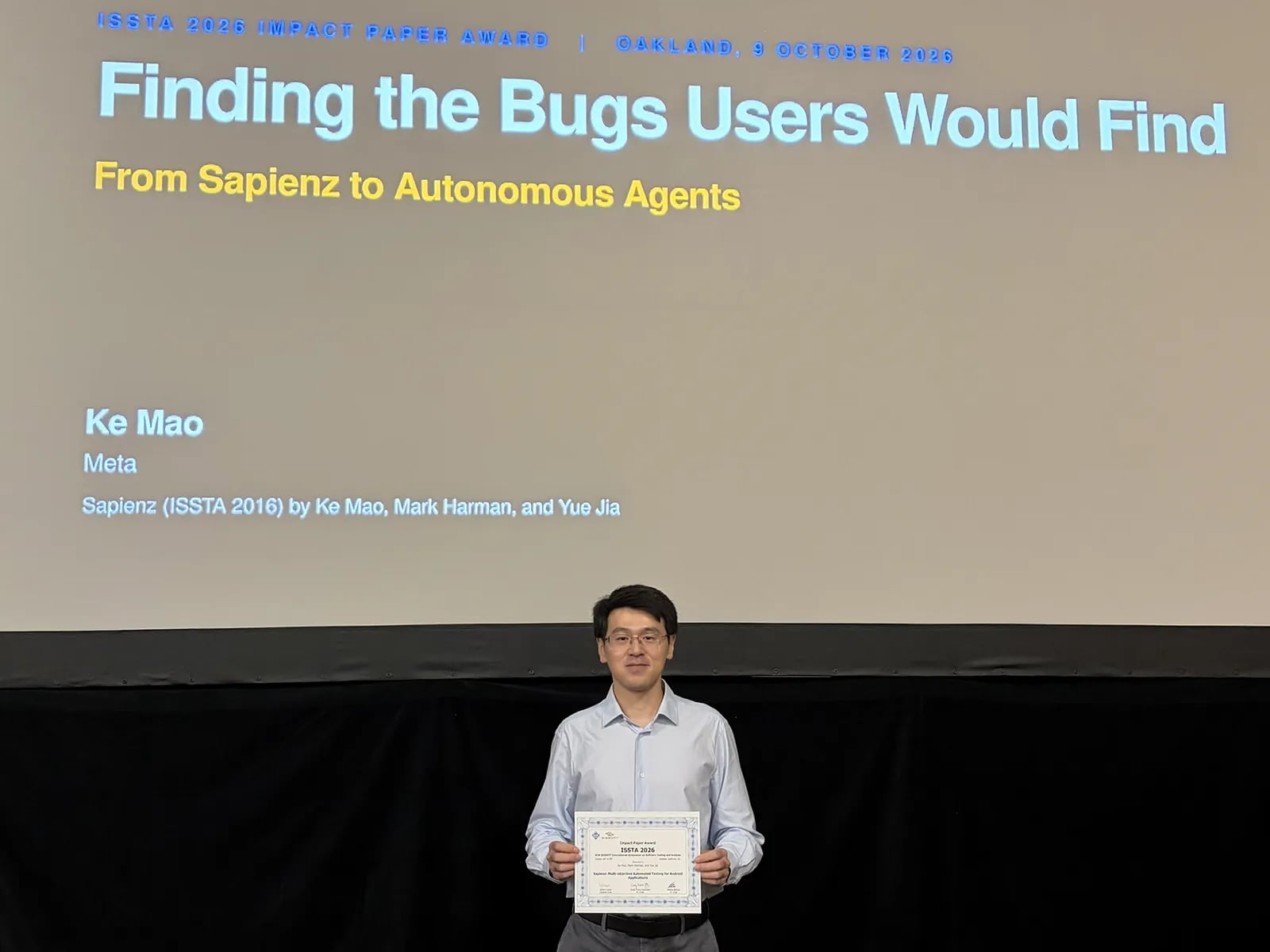
Ke Mao, Mark Harman, and Yue Jia have been recognized with the ACM SIGSOFT International Symposium on Software Testing and Analysis **(**ISSTA) 2026 Most Influential Paper Award for their 2016 research, “Sapienz: multi-objective automated testing for Android applications.” The recognition celebrates a decade of impact from work that began at University College London and went on to become testing infrastructure at Meta.
Sapienz automatically tests apps to find crashes and helps engineers reproduce them in fewer steps, making failures easier to investigate. The original research combined three goals: exploring more of an app, finding more crashes, and reducing the number of steps needed to trigger them. In its evaluation on 1,000 popular Google Play apps, Sapienz found 558 previously unknown crashes.
Within 17 months of publication, Sapienz was deployed at scale at Meta. Today, it runs millions of tests daily across Meta’s platforms, surfaces thousands of unique crashes each week, and helps safeguard hundreds of app releases each month, supporting product reliability and quality.
Sapienz’s applications quickly expanded beyond crash detection. By using test accounts with synthetic conversations, it became the app-exploration engine for dynamic taint analysis at WhatsApp.
خواندن Engineering at Meta با پرو
این منبع جزو کتابخانه پرو است. همه منابع ویژه، ترجمه هوشمند و فیدهای شخصی را باز کنید.
منتشرشده در
Engineering at Meta
ادامه مطالعه