Blocking Identity Resolution Infrastructure
Apple and WebKit have shipped protections against web tracking for a long time.
Apple and WebKit have shipped protections against web tracking for a long time. We put privacy protections in place for cookies in the very first version of Safari, we invented storage and cache partitioning and shipped it ten years before other major browsers, and we’re actively fighting device fingerprinting.
We do this because users deserve to not be tracked, not across websites and not covertly through fingerprinting, unless they explicitly opt in to it. See WebKit’s Tracking Prevention Policy for a comprehensive overview.
Identity Resolution, or the Post-Cookie Era
We fully blocked cross-site cookies six years ago. That was a huge step forward for privacy on the web.
However, the tracking industry has not sat idle since.
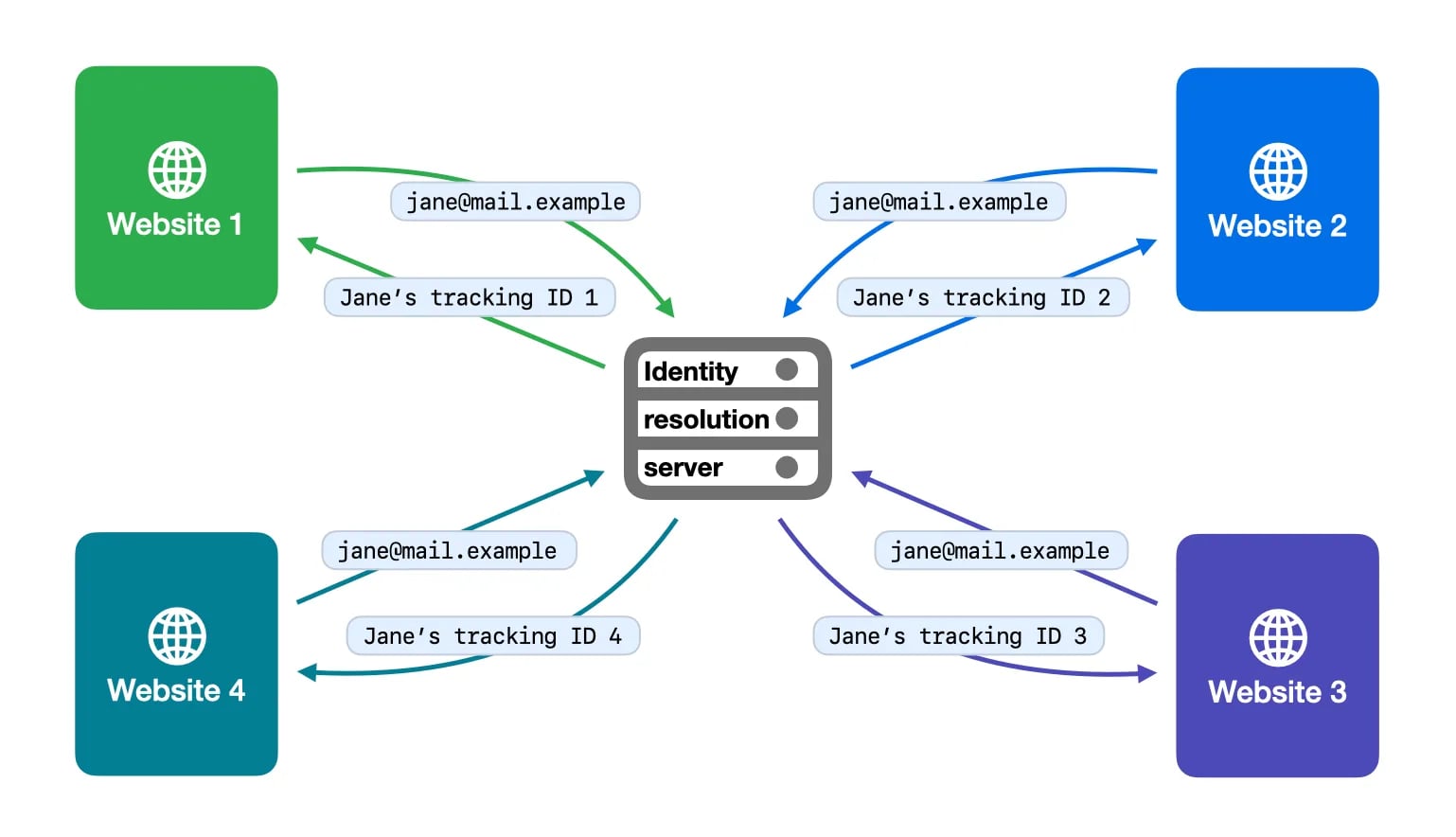
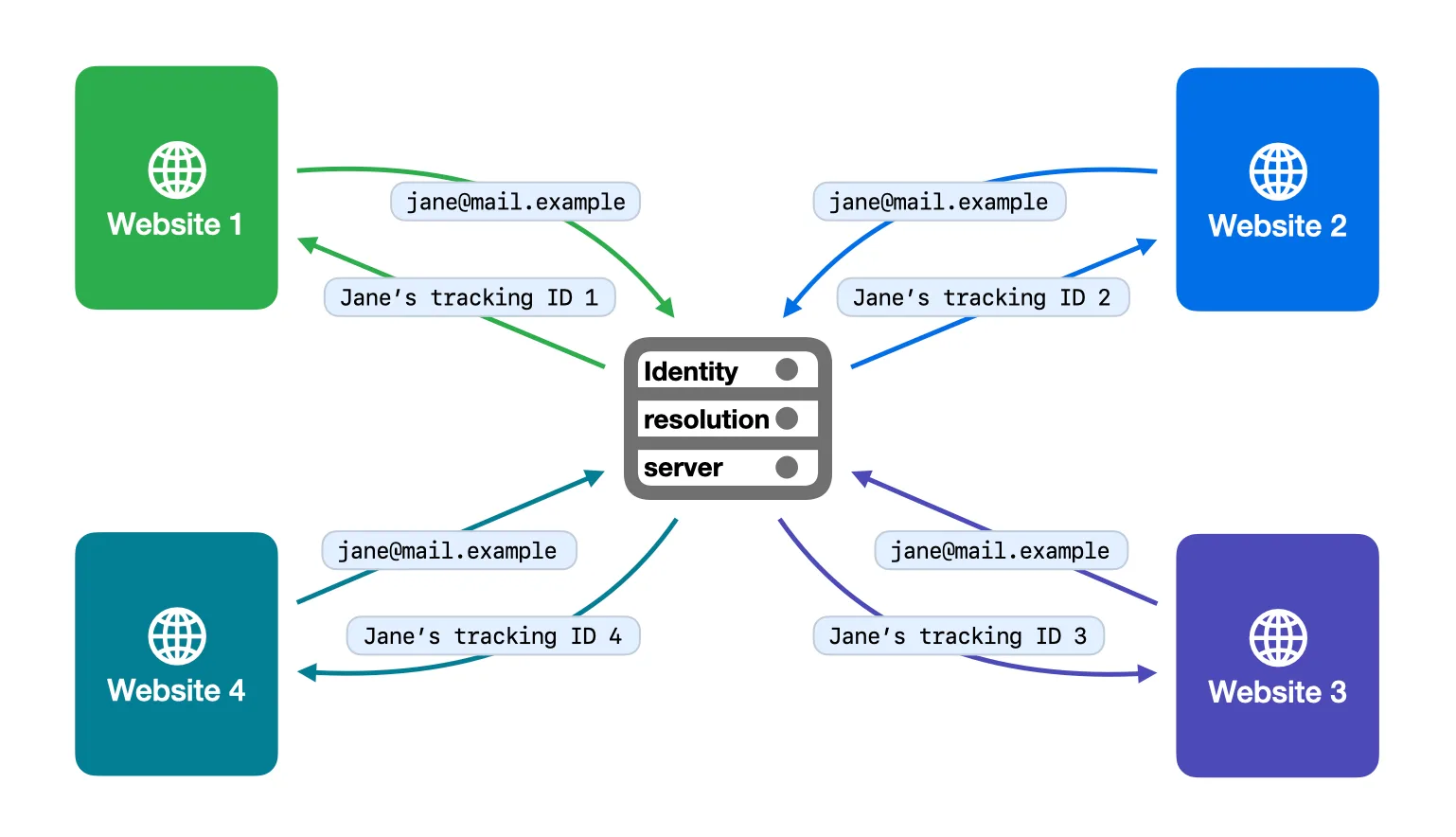
A “post-cookie” tracking method emerged, called identity resolution. In this scheme, third parties (i.e., not the website owner) invisibly collect your email address when you log in or sign up for a newsletter. They send the email address to their servers, create an opaque tracking ID permanently linked to your email address, and send that tracking ID back to the webpage. The tracking ID is stored on the website and can from thereon be used for arbitrary purposes linked to your email address, such as building a profile of your browsing or targeting ads at you across websites. Logging out or unsubscribing from that newsletter does not remove the tracking ID or your email address stored with the third party.
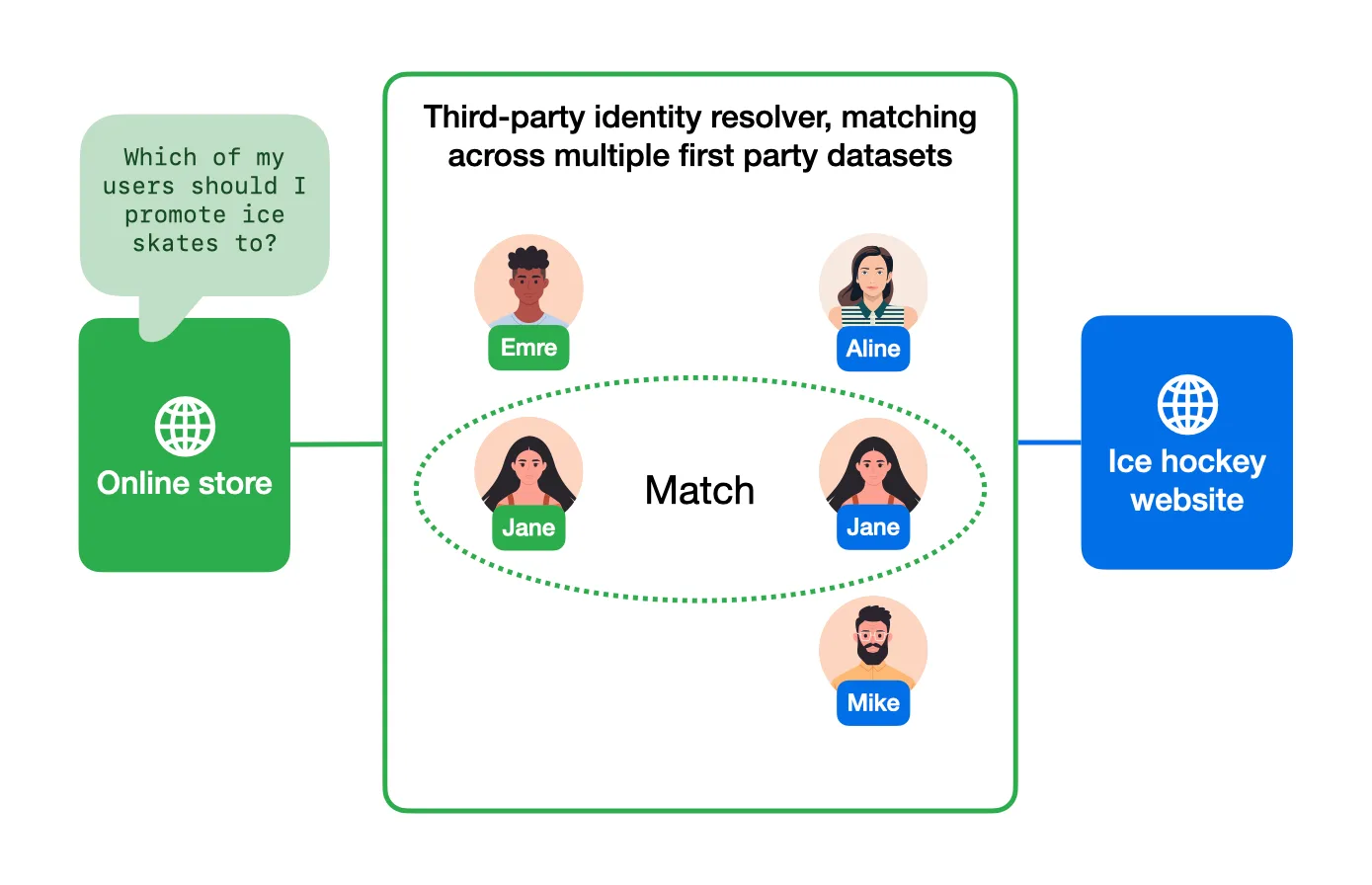
Over time, these third parties collect even more data as you log in using your email address or fill in forms with personal data. They use this to create a data profile of you, known as an identity graph. Here’s an illustrative example of what such a graph may look like:
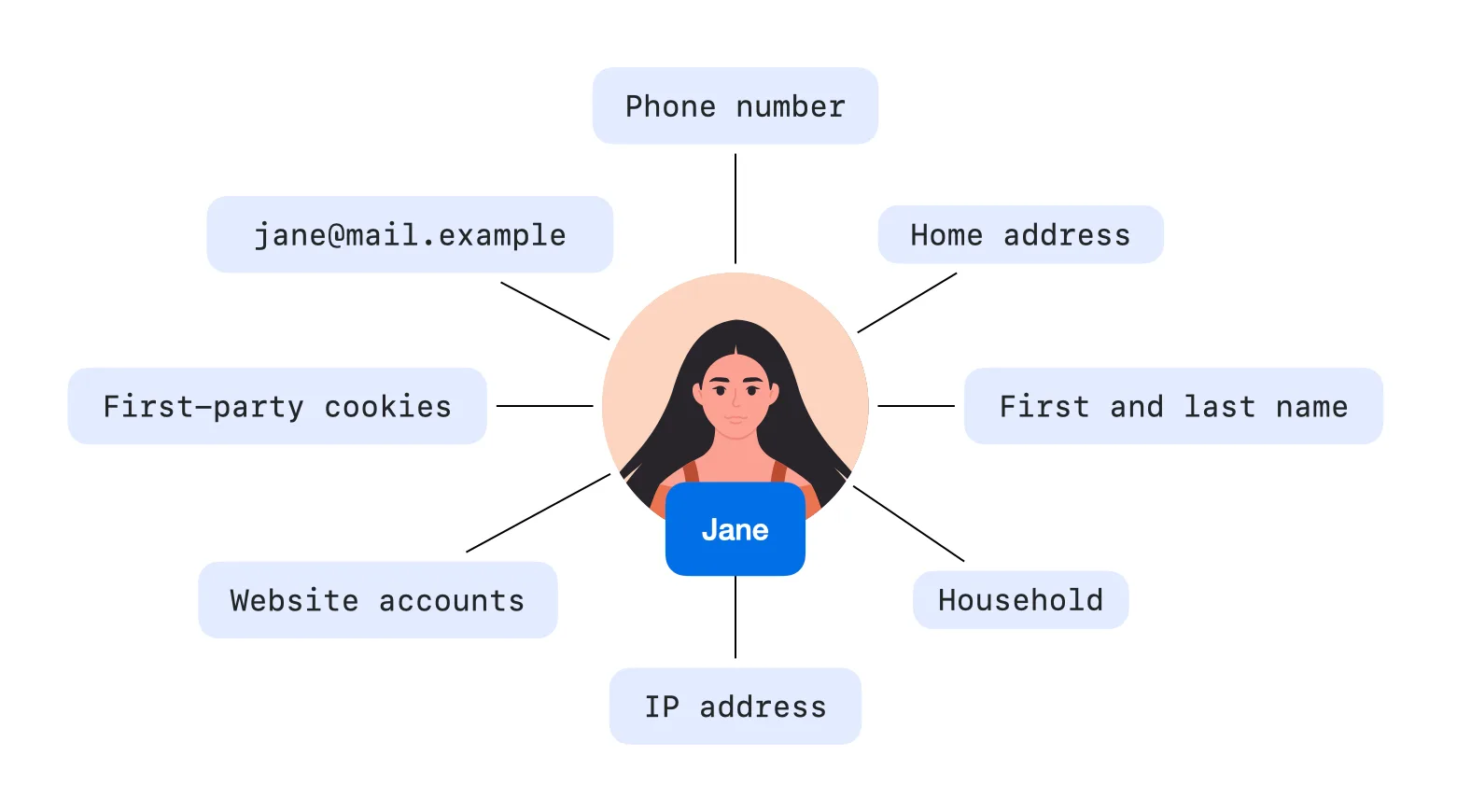
Email addresses almost always constitute Personally Identifiable Information, or PII. Another example is your phone number. Such information not only allows for cross-site tracking, but also cross-device tracking. For the majority of users, their email address serves as a globally unique ID that they keep for years, even decades. When users provide information for one purpose, it breaks their expectation to use it for another unstated purpose. For example, a user who logs in or signs up for a newsletter is not expecting to have their information sent to a third party for other, potentially long-term, intents.
First party personalization is not tracking, and is not what our technologies seek to prevent. But even if identity graphs are only scoped to data from a single company, i.e. a first party, the central identity resolver is a third party and it holds cross-site, cross-device, and cross-party data about the user and can perform matching and targeting functions in the capacity of a clearinghouse. That is a tracking capability that each first party does not have on their own.
What We Are Doing To Protect Users Against Identity Resolution
Some companies serve as third-party infrastructure to facilitate identity resolution. They are present but invisible on many webpages where you enter your email address or use your email address for login purposes. They are not themselves login providers or newsletter services, they’re just there to track you.
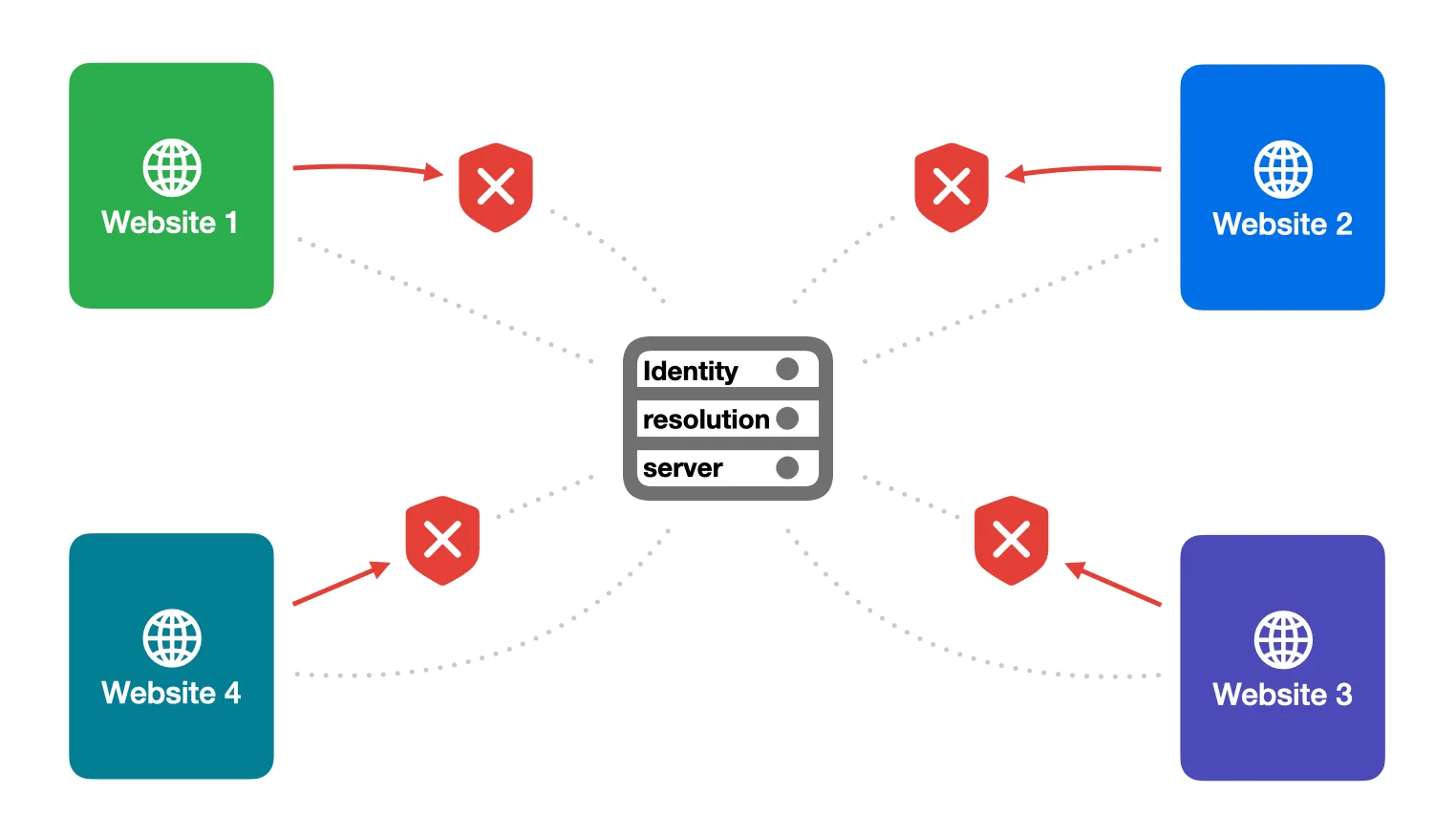
In our iOS, iPadOS, macOS, and visionOS 27 releases, Safari and WebKit block network access to identity resolution infrastructure to prevent cross-site tracking. This stops them from sending your email address to their servers and all the downstream effects of that. The blocking is done on the domain level, meaning they can’t just change the structure of the network request to work around the protection.
Hide My Email
As an iCloud+ subscriber, you are offered the service Hide My Email which enables you to submit unique, randomized email addresses to every new website while still getting their messages in your inbox. Unique, random email addresses provide additional protection against email-based tracking.
Our Commitment to Web Privacy
It’s not enough to block cross-site cookies to prevent cross-site tracking today because the tracking industry has not stopped trying to track users on the web. They have ushered into what they call the post cookie era and in our latest releases we have put strong protection in place. We will continue to prevent covert and cross-site tracking by default, while maintaining the ability for websites to provide first-party personalization to their users.
منتشرشده در
WebKit Blog
ادامه مطالعه




 Vercel Blog