Design Proteins with RFD4-Proteina Using Reward-Guided Inference-Time Search
Protein design is a search problem. Choose amino acids for an eight residue protein sequence and more than 25 billion combinations are possible. Choose amino...
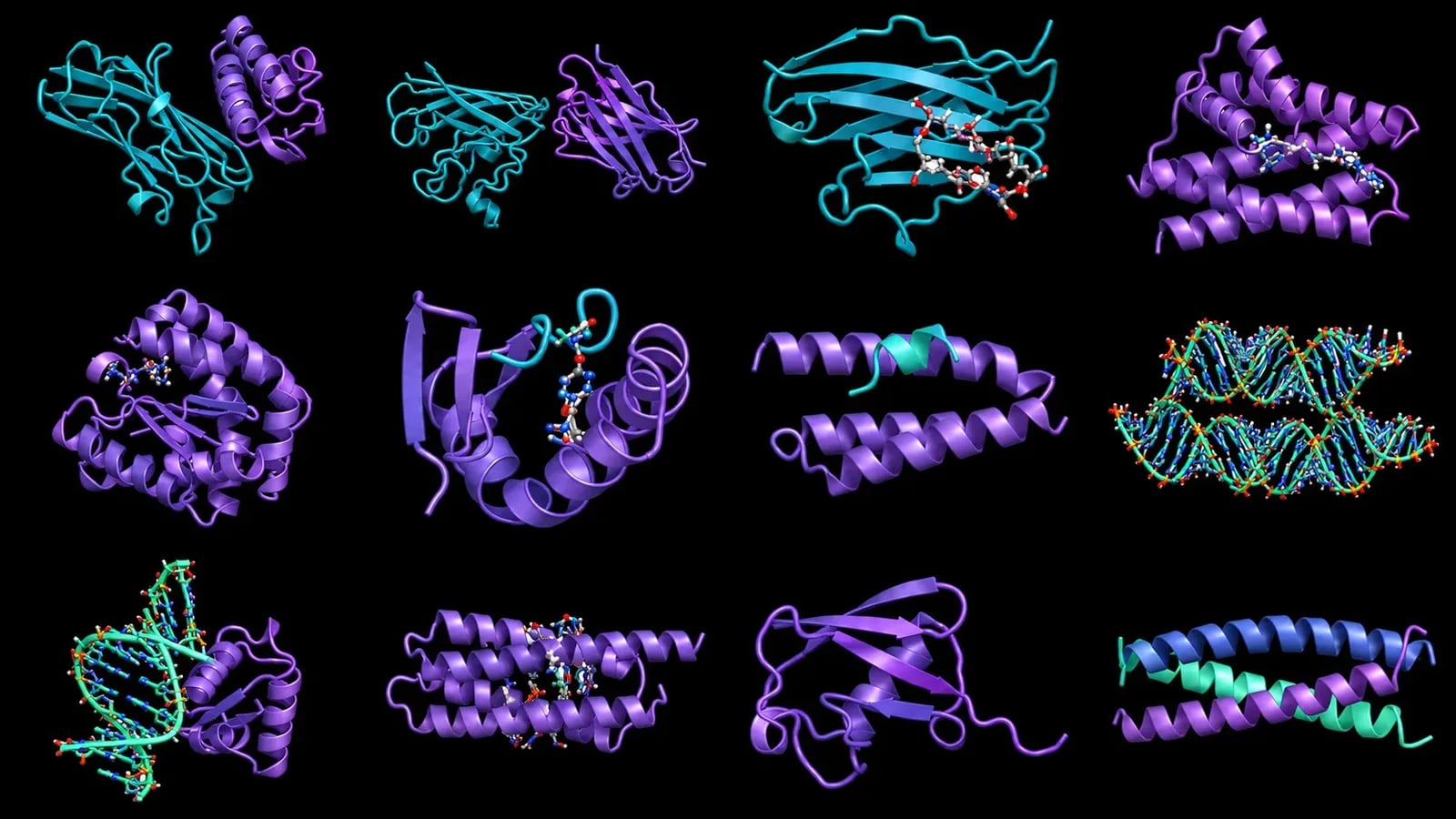
Protein design is a search problem. Choose amino acids for an eight-residue protein sequence and more than 25 billion combinations are possible. Choose amino acids for a 100-residue protein sequence and the number of possibilities exceeds the number of atoms in the observable universe. Somewhere in that space is a protein that opens a path to a new therapy. There are too many combinations to search exhaustively, so finding it depends on knowing where to look.
RFD4-Proteina, an NVIDIA BioNeMo open model co-developed with the Institute for Protein Design at the University of Washington’s School of Medicine, navigates that space using patterns learned from nature. It co-designs protein sequences and all-atom structures, and uses reward-guided inference-time search to focus compute on the most promising candidates.
This tutorial shows computational biologists, ML engineers and drug discovery researchers how to design protein binder candidates against PD-L1, an oncology target, using reward-guided inference-time search and introduces experimental validation results across design tasks.
You can access RFD4-Proteina in two ways:
Keep reading NVIDIA Technical Blog with Pro
This source is part of the Pro library. Unlock every premium source, AI translation and custom feeds.
Originally published on
NVIDIA Technical Blog
Keep reading






 Cloudflare Blog